
Japanese knotweed and your mortgage in 2026
How Japanese knotweed affects a 2026 mortgage, the RICS A to D categories, and what a survey must record.
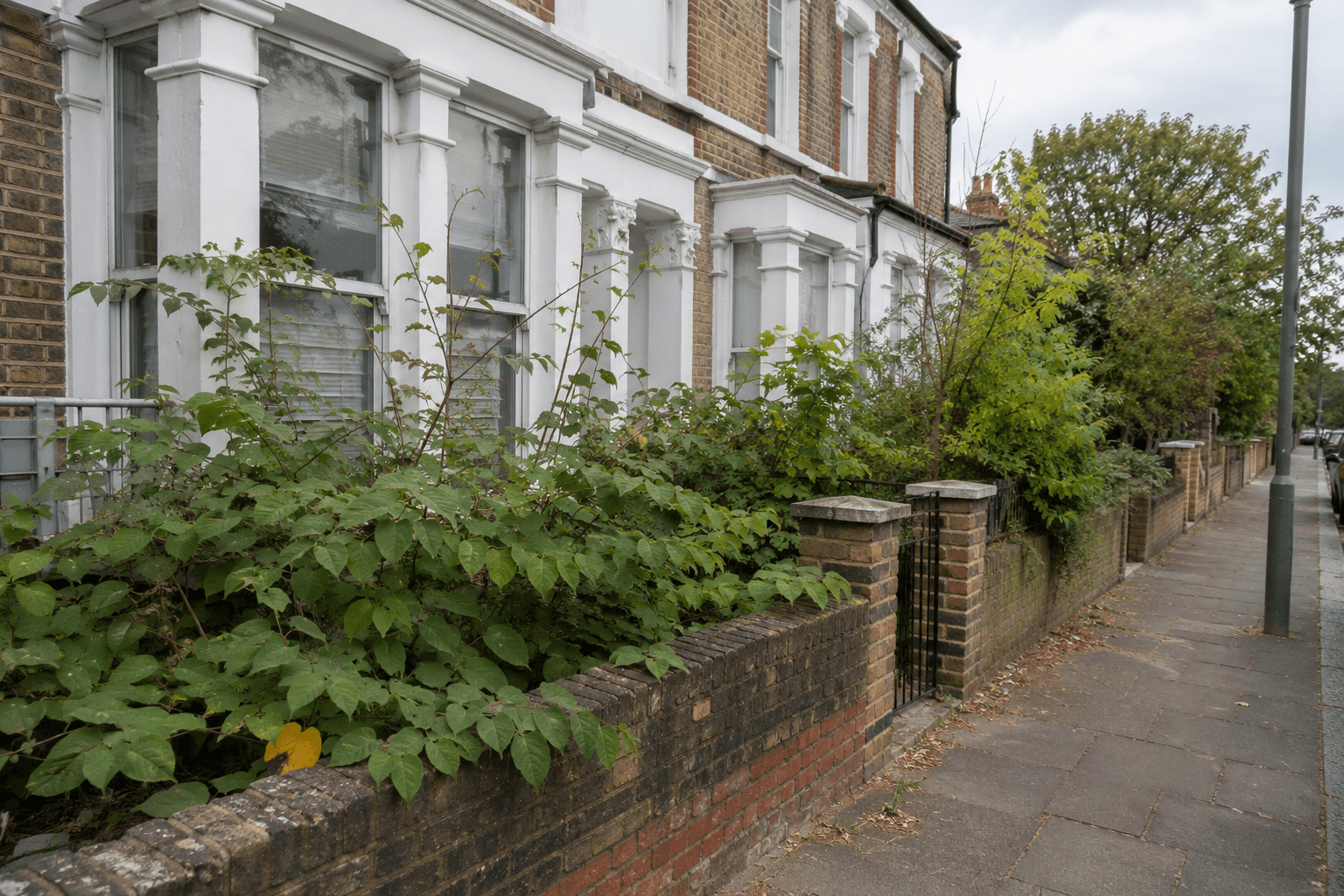
Japanese knotweed affects an estimated 5 percent of UK properties and is linked to around 1.25 billion pounds in annual treatment costs and lost value. For years the sight of it on a survey was enough to sink a sale. In 2026 the picture is very different. Knotweed is now treated as a manageable defect rather than an automatic deal breaker, and whether a lender proceeds depends on evidence, not panic.
This guide explains where the law and lending stand now, the RICS management categories a surveyor will apply, and what a competent survey should record so your transaction keeps moving.
Can you get a mortgage on a house with Japanese knotweed?
Yes, in most cases. As of 2026 lenders no longer refuse automatically when knotweed is mentioned. The decision turns on the RICS management category, whether there is visible structural damage, and whether a funded treatment plan with an insurance backed warranty is in place. Many high street lenders will proceed where the evidence is documented.
The shift dates to the RICS professional standard that took effect on 23 March 2022, which replaced the old distance based test with a practical assessment of actual impact. Before that, the mere presence of knotweed in a valuer's report was often enough for a decline. Now the same finding triggers a categorisation rather than a rejection. In practice, lenders see a higher volume of knotweed files from the Victorian terraced postcodes of South East and South West London, simply because that is where the plant has had the longest to establish.
What are the RICS knotweed categories?
RICS uses four management categories that map closely to how lenders view the risk:
Category A is the most serious. Knotweed is visibly causing damage to the dwelling or an ancillary structure. This usually means a mortgage retention until a specialist report and treatment plan are in place.
Category B is present but not currently causing structural damage. Lenders typically require a funded management plan before they lend.
Category C is low impact, present on site but with no retention required for lending purposes. The buyer is advised to seek specialist advice.
Category D applies to knotweed on neighbouring land. The surveyor reports it, but no retention is advised unless circumstances are exceptional.
The old seven metre rule, which treated any knotweed within seven metres of a building as high risk, has been scrapped. Research showed it overstated the structural threat to robust buildings with substantial foundations, so surveyors now use judgement based on actual impact.
Does knotweed have to be declared when selling?
Yes. The seller answers the TA6 Property Information Form, which asks directly about Japanese knotweed. Answering "no" or "not known" when the seller is aware of an infestation exposes them to a misrepresentation claim after completion. Honest disclosure backed by a treatment plan and warranty is far safer, and it keeps the sale credible to the buyer's lender.
Surveyors are expected to report knotweed that is visible within 3 metres of a property boundary, including in a neighbouring garden, although that alone has limited impact on lending.
Where is Japanese knotweed most common in London?
The worst affected areas are Streatham and Brixton in the south west, both among the worst in the country, with Bromley, Lewisham and Greenwich topping the South East London list and Enfield and Brent leading the north west. Greater London sees roughly 5.9 reported cases per square mile, concentrated in Victorian residential streets and along railway lines.
The pattern is not random. Knotweed was introduced as a Victorian ornamental plant in the 1800s, so the streets where it was first planted are the streets where it persists today. That maps onto the period terraced and semi detached stock that fills much of South East and South West London, and it is compounded by two things: properties backing onto railway lines or embankments, where the plant spread along the network for decades, and regenerated or built over land that carries buried rhizome fragments resurfacing when soil is disturbed by landscaping or an extension.
A hotspot does not make a property unmortgageable. It raises the base rate, so due diligence matters more.
Why a Level 3 survey matters for knotweed
A mortgage valuation is often a limited, drive by inspection. It is not designed to hunt for dormant or concealed knotweed. A Level 3 Building Survey is far more likely to identify growth that has been covered by fresh mulch, a new patio, or recent landscaping ahead of a sale. This matters most on exactly the property type where knotweed is common: a Victorian terrace in Lewisham or Streatham that backs onto a railway line is the textbook case for dormant rhizome hidden under a freshly relaid garden. If you have a specific concern about a single area, a Specific Defect Survey focuses the inspection on that issue.
What a competent survey should record:
The location and extent of growth visible at the time of inspection, boundary lines and neighbouring fence lines, site measurements, and photographic evidence. Lenders and solicitors rely on that detail. A vague note such as "possible knotweed in the garden" creates more difficulty than a proper report confirming the extent and recommended next steps.
What treatment do lenders accept?
The treatment that satisfies a lender follows a clear thread of evidence. Work must be carried out by a professional contractor who belongs to a recognised trade body, typically the Property Care Association (PCA) or the Invasive Non Native Specialists Association (INNSA). A do it yourself attempt with shop bought weedkiller is never acceptable to a high street lender.
The standard requirement for higher category infestations is a 10 year insurance backed guarantee. This reassures the lender that the issue has been treated properly and has not simply been hidden until after completion. Importantly, excavation is not required by default. In many domestic situations effective control is achieved through a managed herbicide programme rather than full removal.
The practical takeaway
Knotweed is no longer the automatic deal breaker it once was, but it cannot be ignored. If you are buying, do not rely on a basic valuation: get a survey that records the affected areas in detail, and make sure your surveyor and solicitor agree on the RICS category. If you are selling, be honest on the TA6 form and have your PCA or INNSA paperwork ready before you go to market.
If you are buying or selling a property in London or the South East and knotweed is on the table, our RICS chartered surveyors can inspect, categorise, and document the situation so your lender has what it needs. Get an instant quote or read more about our building survey service.
Areas covered
Free · No obligation
Get a quote for your property
RICS regulated surveyors across London and the South-East. For most surveys the fee shows on screen before you share any contact details.