
Lease Surrender Valuation: Owens School EC1
A retrospective case study on a lease surrender valuation at Owens School EC1, covering Use Class E and comparables.
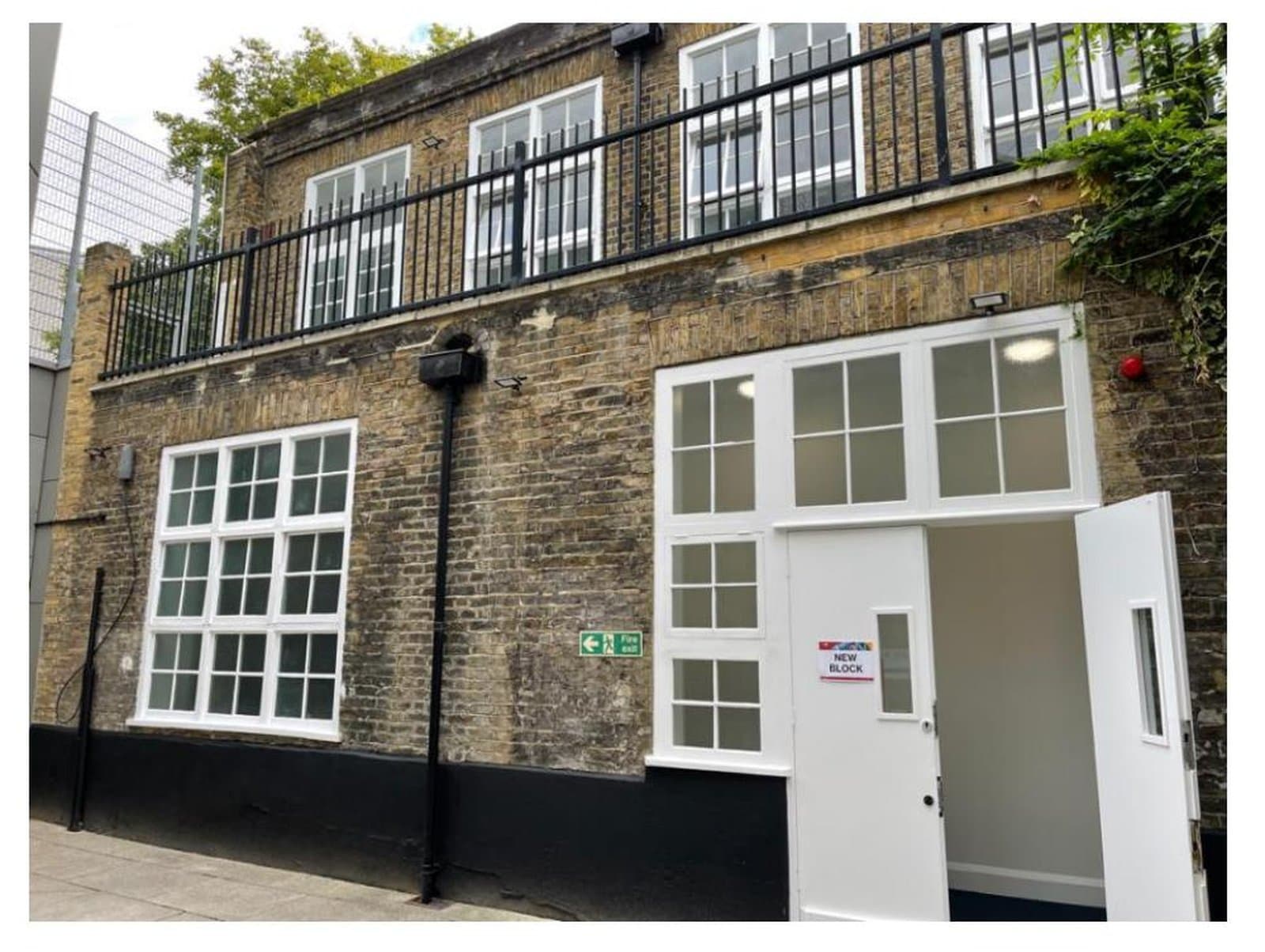
Inner London has been quietly shedding community sport space for years. Boxing gyms, judo halls, youth-run training rooms, the kind of operations that lived on long undervalued leases inside school sites, church halls, and council buildings, have been giving back the keys. The reasons are familiar: institutional landlords reabsorb the space for their own use, rateable values catch up with the local commercial market, and the operator can no longer make the economics work. The surveyor sits at the end of that process, asked to put a defensible market rent on a space that, by the time anyone reads the report, often looks nothing like it did when it was let.
This is a case study of one such instruction.
The brief
We were instructed by a community youth organisation occupying a two-storey self-contained building (P2) on the grounds of Owens School, a City and Islington College campus on Goswell Road, EC1. The building had operated as a boxing gym for two decades under an underlease originally granted in December 2002. The tenant was preparing to surrender the lease back to the college, and required an independent RICS rental valuation as part of the internal documentation supporting the surrender negotiation.
By the time our team attended site, the college had already taken back occupation and converted the interior into four classrooms. We could not inspect the boxing gym layout that had existed throughout the lease, only the educational fit-out that replaced it. The valuation therefore had to be reconstructed: assume vacant possession, assume the originally-let footprint, and test the market rent at the surrender date against comparable evidence from similar inner-London commercial space.
Why a surrender valuation matters
A lease surrender is a negotiated transaction. Either the tenant pays a premium to be released, or the landlord pays one to recover the space, depending on how the passing rent compares to the open market rent at the surrender date, the lease term remaining, the condition of the premises, and any contractual repair or reinstatement obligations.
The rental valuation is the anchor. Once both sides agree what the space would let for today, every other element of the surrender negotiation (premium direction, dilapidations offset, fit-out residuals) is calculated around that number. A weak or contested rental figure means a weak or contested surrender position.
The Use Class E question
This is where the case becomes useful as a worked example.
When the underlease was granted in December 2002, the property would have sat in Use Class D1 or D2 under the original Town and Country Planning (Use Classes) Order 1987. D1 covered non-residential institutions including educational use; D2 covered leisure and assembly such as gyms and sport halls.
The September 2020 consolidation merged a wide range of former classes into the new Use Class E (commercial, business, and service). Gyms, medical clinics, retail, offices, and light-industrial uses now share a single class for planning purposes. That change matters for valuation because the market we are testing the subject rent against is no longer the narrow "community leisure" market of 2002. It is the broader Class E commercial market of today.
In practice, that means our comparable evidence is drawn from a wider pool: former gym space, former medical or clinic space, ground-floor light-commercial units, even some retail-to-leisure conversions. The subject is rated against all of these, with adjustments for specification differences. The most material adjustment in this case was air conditioning. Comparable gym space within walking distance of well-connected tube stations is almost universally air-conditioned, while the subject was not.
How the valuation landed
The comparable evidence relied on came from four properties within roughly two miles of Owens School, all of which had been occupied for gym, medical, or similar light-commercial purposes. Rental tones across the comparable set ranged broadly from the low £20s per sq ft at the lower end (less central, basement or lower-ground) to over £40 per sq ft at the upper end (prime location, fully fitted, air-conditioned). The subject, given its location, dated specification, and lack of air conditioning, sat firmly in the lower part of that range.
We landed in the low-£20s per sq ft for an assumed footprint of just over 2,000 sq ft, producing an annual market rent broadly consistent with comparable inner-London former-gym space of similar age and specification.
The methodology was the conventional comparable method (RICS Valuation Global Standards 2020, VPS 1 to 5 with the internal-purposes exception engaged). Vacant possession was assumed. The valuation excluded the limited ancillary rights to use the college's floodlit pitches that formed part of the original underlease, since those rights would not transfer to a hypothetical Class E commercial tenant.
What the case reveals
The economics of inner-London community sport space have shifted structurally over the past two decades, and surrenders of this type are now common.
A boxing gym, judo dojo, or youth athletics operation taking a long lease on a sub-prime EC1 space in 2002 paid a rent that reflected the D1 or D2 market at the time. Twenty years on, the same physical space, valued as Class E, can comfortably let to a commercial gym, clinic, or studio operator at a multiple of the original rent. The community operator's surplus, if there was one, gets eroded by rates revaluations and inflation. The institutional landlord's opportunity cost grows every year. At some point the surrender becomes the path of least resistance for both sides, and a surveyor is brought in to put a number on the space.
This is not a value judgement. It is the mechanical reality of how long community-use leases interact with the post-2020 planning regime and the inner-London commercial rental market. For surveyors advising on either side of these surrenders, the technical question is the same regardless of the operator's mission: what would this space let for today, as Class E, with vacant possession, tested against a comparable set drawn from the broader commercial market the consolidated use class now creates.
The wider pattern
This case also sits inside a quieter trend across London's education estate. Further and higher education landlords across the capital, City and Islington College included, have been reabsorbing previously-let space as their own student numbers, apprenticeship funding, and capital-grant pipelines have shifted. Buildings that were let to third-party community or commercial operators in the 2000s and 2010s are increasingly being recovered for direct educational use.
For tenants on these underleases, the valuation conversation is rarely just about rent. It typically includes dilapidations, reinstatement, residual fit-out value, and (where the original instruction had a charitable or community-purpose framing) some discussion of whether the surrender is genuinely voluntary or structurally forced. The rental valuation does not answer those wider questions, but it is the figure all the others negotiate around.
When this kind of valuation is useful
Independent RICS rental valuations for lease surrenders, assignments, and rent reviews are standard work for our commercial team. If you are a community operator, charity, occupier, or institutional landlord facing a surrender negotiation on inner-London space, we provide RICS Red Book compliant rental valuations across London and the South-East. Get in touch via the contact page or call us directly.
Areas covered
Free · No obligation
Get a quote for your property
RICS regulated surveyors across London and the South-East. For most surveys the fee shows on screen before you share any contact details.