
Why We Surveyed a Brand-New Architect-Designed Home in Chiswick
A RICS Level 3 Building Survey on a recently built home in Chiswick designed by a Zaha Hadid architect. Here's what we found and why even new homes need a proper survey.
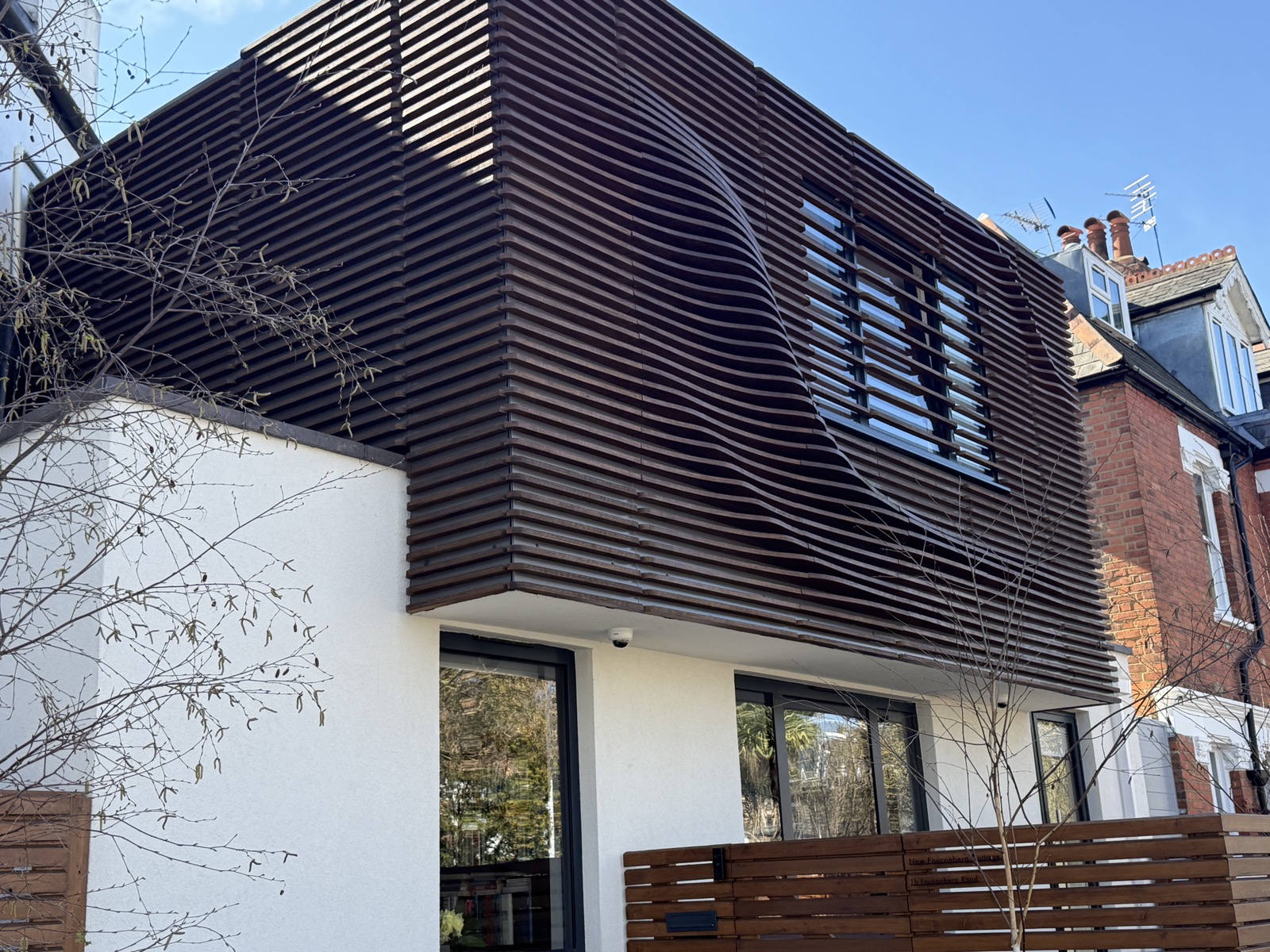
There's a common assumption that recently built homes don't need a building survey. The logic goes: it's practically new, so what could possibly be wrong?
Quite a lot, as it turns out.
The property
Our client Marc was purchasing New Fauconberg Cottage, a detached home on Fauconberg Road in Chiswick's Grove Park, a short walk from the Thames and Chiswick House. This isn't your typical property. It was designed by Torsten Bröder, a senior architect at Zaha Hadid Architects (the practice behind the London 2012 Aquatics Centre and the Serpentine Gallery extension, among others), and built by Bröder and his partner Simon Gentry over a period of four years. The house has featured in Open House London and is locally recognised for its distinctive sculptural timber louvre cladding.
With three bedrooms, a south-facing garden, an EPC B rating, and a guide price of £1,000,000, it's a serious purchase. Marc wanted the full picture before committing, so he instructed us to carry out a RICS Level 3 Building Survey.
What the survey covered
A Level 3 is the most comprehensive residential survey available. We inspect the building's construction methodology, not just the surface condition, examining everything from the structural walls and roof down to the services, drainage, and fire safety provisions.
The 110-page report assessed every accessible element of the property, rated each on the RICS condition scale, and flagged where further investigation or specialist input was needed.
The building fabric: all clear
The structural elements of this property are in excellent condition, exactly what you'd hope for from a home designed and built by a qualified architect. External walls, windows, doors, ceilings, floors, internal walls, joinery, and bathroom fittings all received Condition 1 ratings (no repair needed, maintain in the normal way).
That's a clean bill of health on the fabric and a testament to the quality of the design and construction.
Where the survey earned its keep: the services
The electrical installation, water supply, heating system, hot water, and drainage all received Condition 3 ratings, the most serious on the RICS scale.
A Condition 3 on a recently completed home doesn't necessarily mean things are broken. In this case, it meant there was no evidence of the certifications and sign-offs that a buyer should expect before completing. We recommended:
- Electrical testing by an NICEIC-registered electrician to confirm the installation complies with current standards
- Heating and hot water testing by a qualified engineer to verify the systems are working correctly
- Plumbing checks for potential leakage issues
- Drainage investigation to rule out blockages
We also identified snagging items in the first-floor bathroom and utility area. Minor finishing defects that are easy to miss without a trained eye.
The paperwork gap
Beyond the physical inspection, the survey flagged critical documentation that Marc's solicitor needed to chase before exchange:
- Local authority planning permission and a completion certificate for the build
- Building Regulations approvals for the construction, heating, and electrical installations
- A valid 10-year structural warranty or equivalent professional consultant's certificate
- FENSA certification or Building Regulations approval for the double glazing
Without these documents in place, a buyer has no formal assurance that the property was built to the required standards, regardless of how good it looks or who designed it.
Why newer homes still need surveys
There's a persistent myth that a recently built home is a safe bet. In reality, newer properties are where we regularly find:
- Services that haven't been properly commissioned or certified, exactly as we found here
- Snagging defects that haven't been addressed before sale
- Missing or incomplete building control sign-offs that could affect insurance, mortgage lending, and resale
- Fire safety provisions that don't fully meet current Approved Document B requirements
This is especially true when buying from a private owner rather than a large developer. A self-built home, however well designed, may not have gone through the same handover and defects liability process that a volume housebuilder would typically follow. A building survey gives you the evidence to raise these issues before you exchange contracts, not after, when your leverage disappears.
The outcome
Marc went into his purchase with a clear, independently verified picture of what he was buying. The building fabric was sound. The services needed certification. The paperwork needed chasing. And a handful of snagging items needed putting right.
That's exactly the kind of clarity a Level 3 Building Survey provides, whether the property was built in 1926 or 2025.
Buying a recently built home in London or the South-East? Don't assume everything's been done properly. Get a quote for a Level 3 Building Survey →
Areas covered