
What Happens to a Retail Chain's Property Portfolio When It Goes Into Administration
The Original Factory Shop closed 137 stores in April 2026. How the administration disposal works, who buys, and why it matters for expanding operators.
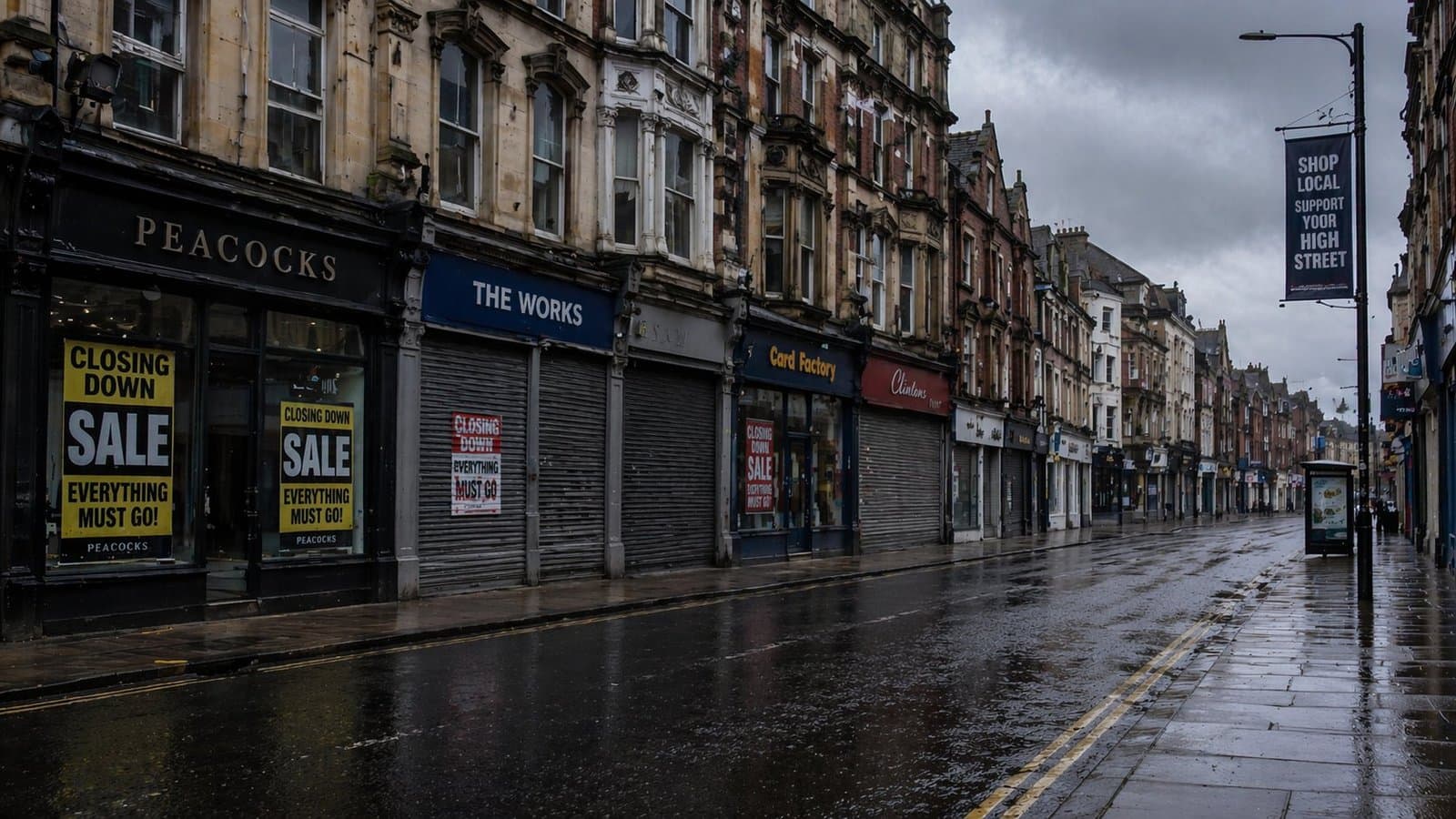
When a national retailer collapses, the property portfolio becomes one of the last significant assets the administrators have to deal with. The process is structured, time-sensitive, and almost always ends with the units finding new occupiers within months. For operators actively expanding, administrations create a brief window where prime sites become available that would otherwise never reach the open market.
The collapse of The Original Factory Shop in 2026 is a recent case in point. We've been watching it closely for our commercial acquisition clients, and the pattern it follows is typical of every major retail administration.
The TOFS Timeline
The Original Factory Shop entered administration on 28 January 2026, appointing Interpath Advisory as joint administrators. At the time, the company operated 137 stores and a head office in Bolton, employing around 1,180 people across the estate.
The retailer had been in difficulty for some time. Modella Capital, the private equity owner that also backs TG Jones, had acquired the business in February 2025 when it was trading from 180 stores. A company voluntary arrangement (CVA) followed in April 2025, which closed a number of branches and reduced the portfolio to 137 locations. The business continued to trade, but weak consumer confidence, rising cost inflation, and disruption from a third-party warehouse operator eventually made the position unsustainable.
On entering administration, the website was pulled down immediately. The physical stores stayed open to run clearance sales while administrators tried to find a buyer. No viable offers were received. On 4 April 2026, all 137 remaining stores and the Bolton head office closed for good.
That's the business side of the story. The property side is where it gets interesting.
How the Property Disposal Actually Works
When a retailer enters administration, the administrators take control of every aspect of the business, including the leases. Their legal obligation is to act in the best interests of creditors, which usually means maximising the recovery from every asset, including the property portfolio.
Here's the broad sequence that follows:
Phase 1: Assessment (weeks 1 to 4). Administrators appoint a commercial property agent, often one of the national firms like Savills, CBRE, Knight Frank, or Cushman & Wakefield, to assess the portfolio. Every lease is reviewed: rent, break clauses, expiry dates, service charges, and restrictive covenants. Stores with strong locations and flexible lease terms are flagged as potentially transferable to a buyer of the business. Poorer-performing sites are earmarked for straight disposal.
Phase 2: Business sale attempts (weeks 2 to 12). The administrators market the business as a going concern, either in whole or in packages. A buyer taking on the business also takes on the leases, which is the cleanest outcome for everyone involved: landlords keep a paying tenant, employees keep their jobs, and creditors recover more of the debt. This is what happened with WH Smith's high street stores in 2025 when TG Jones acquired them, and it's what the administrators will have been trying to achieve with TOFS.
Phase 3: Individual unit disposal (weeks 8 onwards). When no whole-business buyer emerges, or when only part of the estate sells, the remaining leases need to be dealt with individually. This typically takes one of three routes:
-
Assignment: The administrators assign the lease to a new occupier. The incoming operator takes on the remaining lease term, rent, and conditions. This is how competing retailers often acquire sites: they take an existing lease at an existing rent, avoiding the time and cost of a new lease negotiation.
-
Surrender: The administrator agrees terms with the landlord to hand the lease back early, usually paying a premium to do so. The landlord then markets the property themselves.
-
Forfeiture or expiry: If the lease is near its end, the administrator simply stops paying rent. The landlord forfeits the lease and recovers the unit directly.
The choice between these depends on the lease terms, the strength of the landlord's position, and whether there's immediate occupier demand.
Who Ends Up Buying the Units
Retailer collapses rarely leave units empty for long. A 3,000 to 5,000 sq ft prominent roadside unit, the type TOFS typically occupied, is exactly what a long list of expanding operators are actively looking for.
The buyer profile usually falls into a few categories:
Direct competitors move fastest. If Home Bargains, B&M, or Poundland sees a TOFS unit in a catchment where they've been trying to acquire, they'll often take the lease by assignment. They already know the site performs because a discount retailer has been trading there.
Expanding restaurant and leisure operators pick up the urban and edge-of-town units. Operators like Five Guys are actively seeking 2,500 to 3,500 sq ft units on arterial routes and retail parks nationally. A closed discount store on a prominent roadside location is a direct fit for this brief.
Pet retailers like Jollyes (actively seeking 25 new stores in 2026 across 3,000 to 7,000 sq ft retail park units) take the out-of-town sites.
Gyms, supermarkets, and convenience retailers absorb the larger footprints.
Local operators and landlords' own redevelopment plans take the remainder, sometimes with a view to splitting larger units into multiple smaller ones, or reconfiguring for alternative use entirely.
Why This Matters for Acquiring Operators
Every major retail administration creates a short-term supply boost of units that are:
- Already fitted to retail standards (saving fit-out cost)
- In proven trading locations (the previous tenant had chosen them for a reason)
- Available on existing lease terms that may be more favourable than a fresh open-market letting
- Often released in regional clusters, allowing multiple acquisitions in one transaction
The catch is that the disposal window closes quickly. Administrators are under pressure to conclude affairs efficiently, and the best units are typically under offer within weeks of being marketed. Operators who aren't already watching the pipeline and have direct lines to the disposal agents tend to miss out.
For our commercial acquisition clients, we track these closures as they unfold, identify units that match current operator requirements, and open conversations with the administrators' appointed agents early. By the time a unit appears on Rightmove Commercial or LoopNet, it's usually been shopped to the major names already.
What's Next
The TOFS estate will filter through its various disposal routes over the coming months. Given the number of prominent roadside and retail park sites in the portfolio, and the variety of operators actively seeking exactly that profile of unit, most of them will find new occupiers by the end of 2026.
The broader context is worth noting. TOFS is not an isolated case. Claire's Accessories, another Modella-owned brand, has also entered administration. New Look is continuing to shed sites. Revolution Bars and BrewDog have closed a combined 59 pubs this year. Every closure is a live disposal, and every disposal is a window for operators ready to move.
Working on a commercial acquisition, or have a site to dispose of? We represent acquiring parties seeking strategically positioned commercial premises across the UK, and work with landlords and disposal agents to match portfolio opportunities with active mandates. Get in touch →
Areas covered
Free · No obligation
Get a quote for your property
RICS regulated surveyors across London and the South-East. For most surveys the fee shows on screen before you share any contact details.