
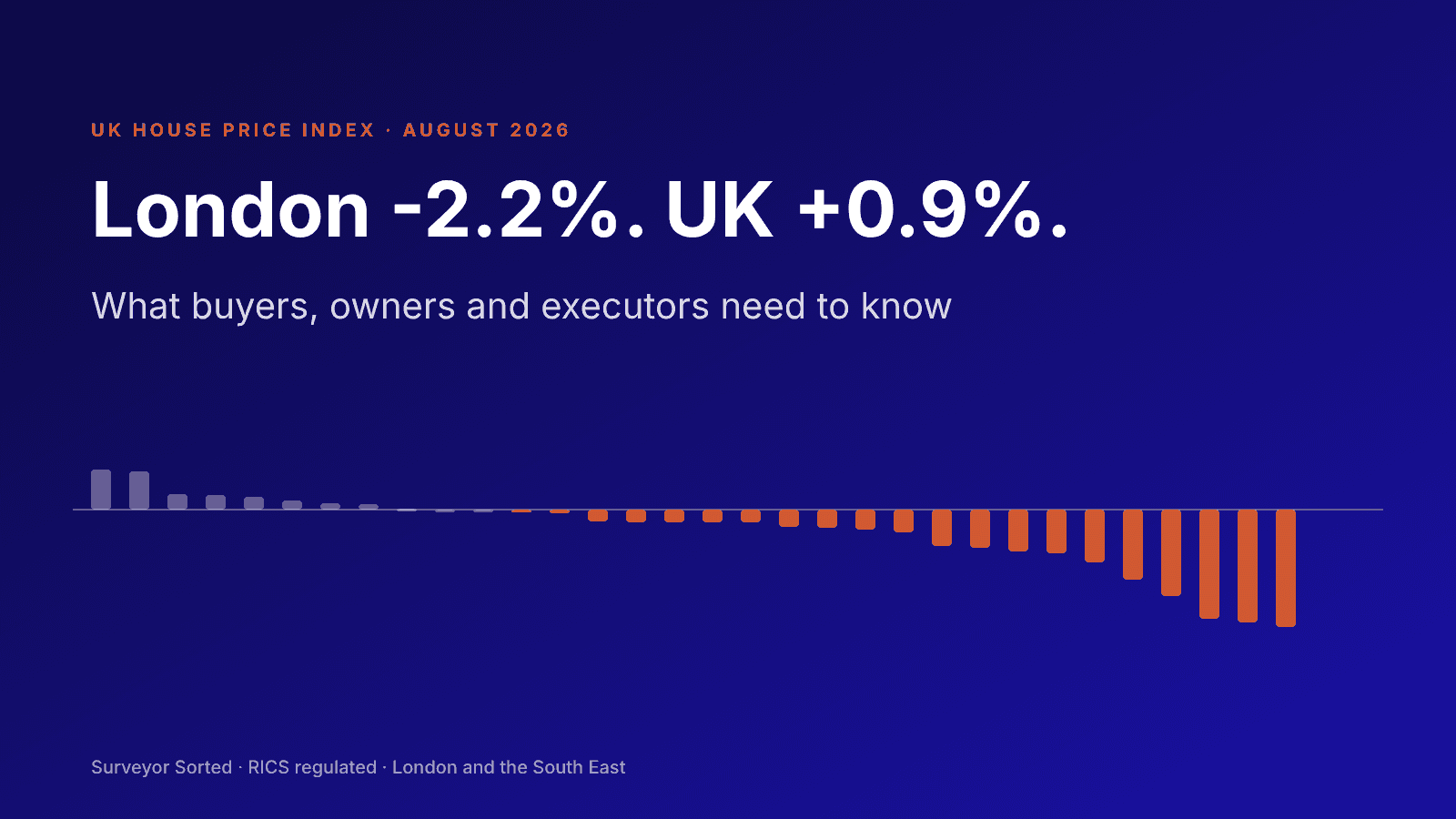
UK House Price Index August 2026: what London buyers, owners and executors need to know
London prices fell 2.2% in the year to August 2026 while the UK rose 0.9%. What it means for buyers, landlords and probate, CGT and divorce valuations.
Local coverage
Victorian and Edwardian terraces, interwar semis, and significant conservation-area housing in Haringey and Enfield.
You can compare us straight away.
About the area
North London covers Haringey and Enfield. Haringey is dominated by Victorian and Edwardian terraces across Crouch End, Muswell Hill, Tottenham, and Finsbury Park, with a strong family home market and significant conservation area concentration. Enfield extends further north into interwar suburbia and rural-edge Green Belt properties.
Boroughs covered
Postcodes
N4 · N6 · N8 · N15 · N17 · N22 · EN1 · EN2 · EN3 · EN7 · EN8 · EN9
Housing stock
Victorian terraces across Crouch End, Hornsey, Stroud Green, and Finsbury Park. Large Edwardian family houses in Muswell Hill and Highgate. Post-war and interwar stock in Tottenham, Wood Green, and South Tottenham. Extensive 1930s semi-detached housing across Enfield, Palmers Green, and Winchmore Hill. Green Belt properties and rural-fringe stock in northern Enfield.
Market context
Inner North London (Crouch End, Muswell Hill, Highgate) has been consistently strong over the last decade, driven by school catchment demand. Tottenham has seen significant regeneration interest following the stadium and associated development. Enfield values track more closely to outer London averages.
Market data
North London combines Victorian and Edwardian terraces through Crouch End, Muswell Hill and Highgate with interwar semis and significant conservation-area housing across Haringey and Enfield. It is currently one of the steadier parts of the capital: Haringey averaged about £639,000 in July 2026, up 1% on the year, with terraced houses up nearly 3% to around £803,000 while flats were broadly flat, and Enfield edged up to about £471,000. Demand for period family houses in the conservation pockets has stayed firm and well-presented terraces are selling quickly, so buyers here have less leverage than elsewhere in London and a survey is often the only real negotiating tool. The Victorian and Edwardian stock that dominates makes condition, roofs and historic movement the central survey concern. (Figures from the UK House Price Index, HM Land Registry and ONS, July 2026 data published September 2026; local figures are provisional and subject to revision.)
Data: July 2026 (UK House Price Index, published 16 September 2026) · refreshed October 2026 · reviewed quarterly
What we often find
Roof defects in Victorian terraces, particularly original slate coverings and valley gutters
Chimney stack and flashing defects across period stock
Non-compliant electrical installations in unmodernised Victorian houses
Damp and ventilation issues in basement flats, particularly in conservation areas
Subsidence indicators in Enfield clay soil areas
Neighbourhoods
From the field

London prices fell 2.2% in the year to August 2026 while the UK rose 0.9%. What it means for buyers, landlords and probate, CGT and divorce valuations.

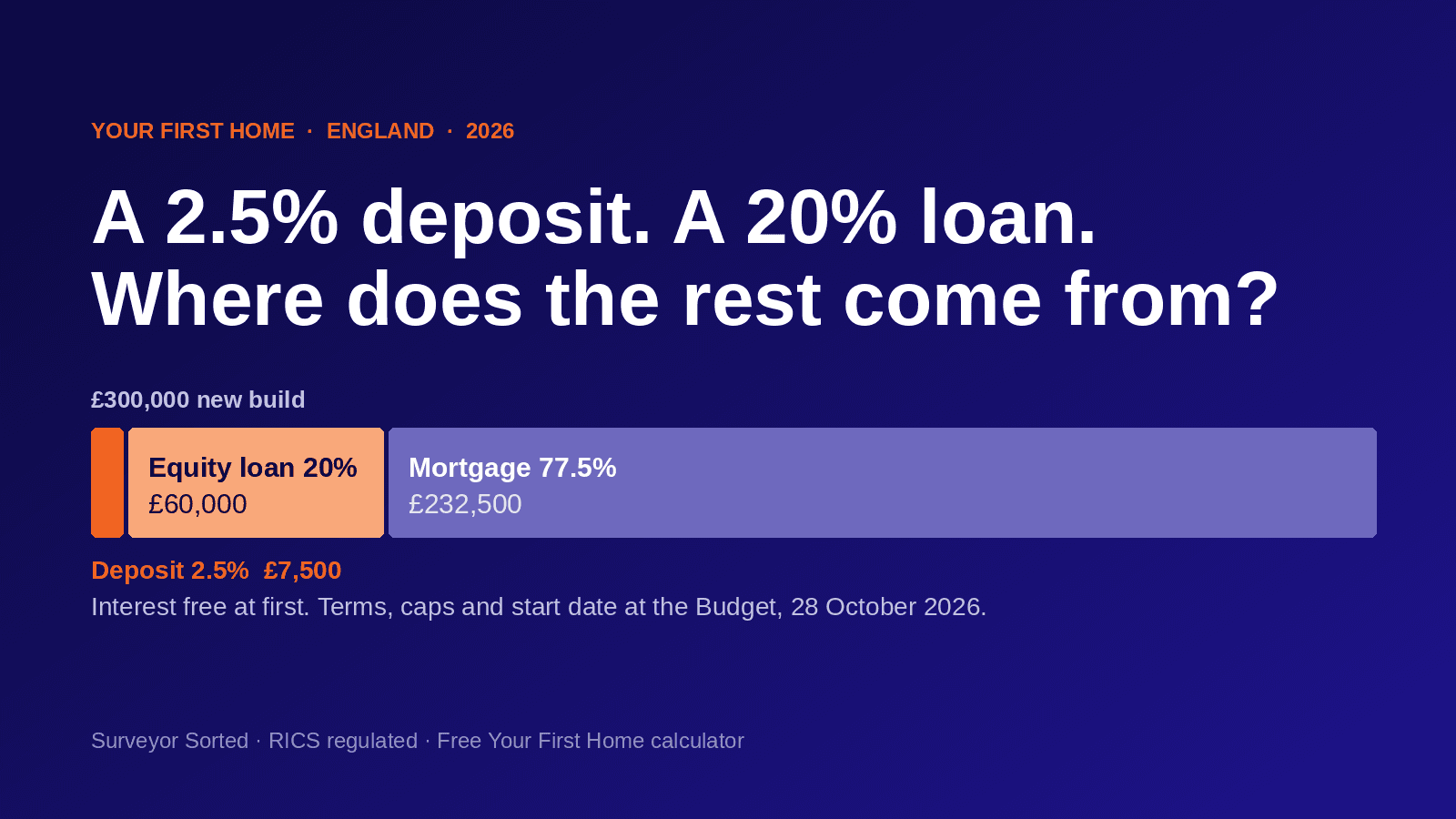
The 2.5% deposit, 20% equity loan scheme: what is confirmed, what waits for the 28 October Budget, and a calculator for your own numbers.

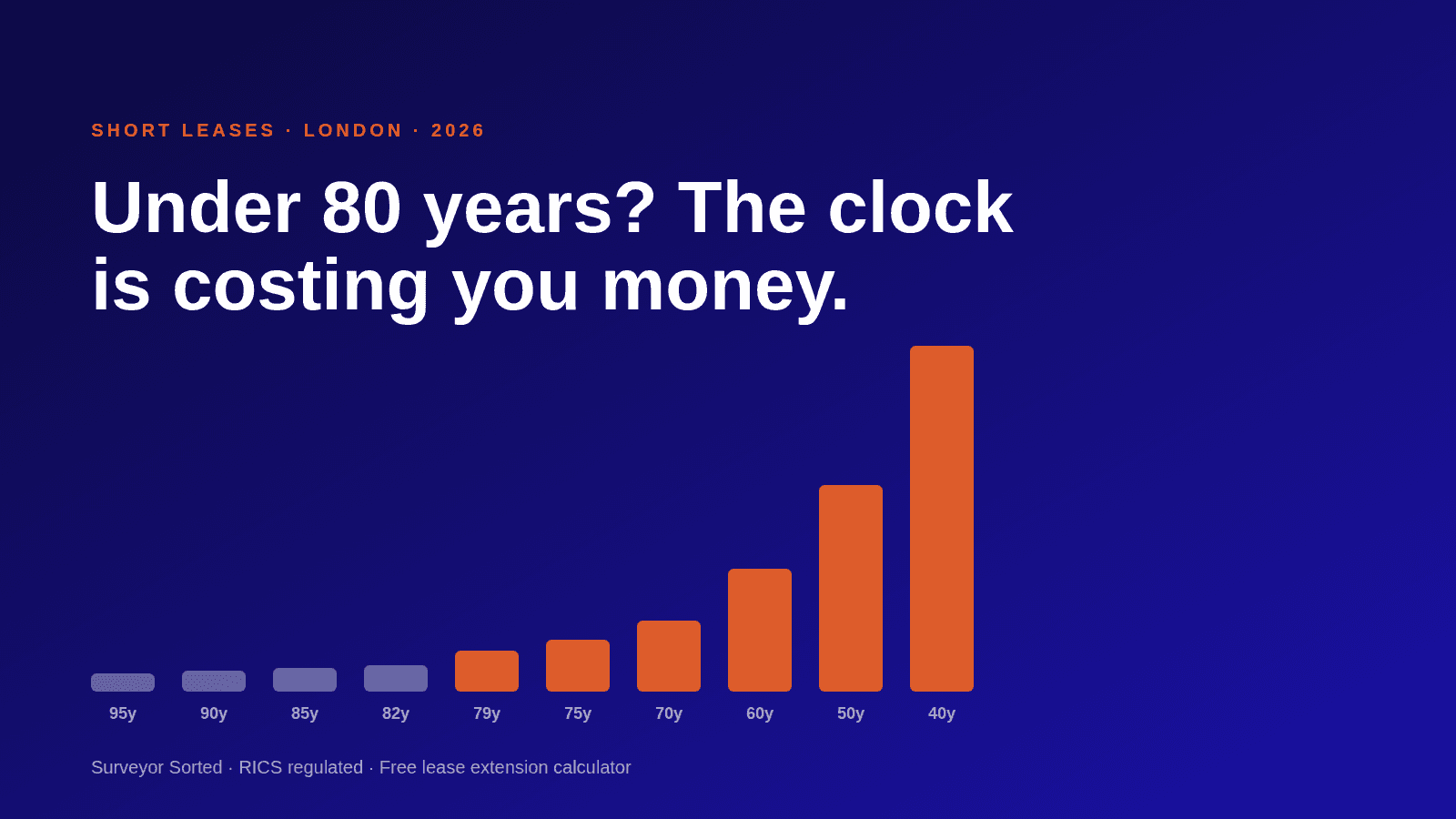
One in ten leases in England is under 80 years. What that does to the premium and the mortgage, where reform stands, and how to work out your number.
Get a no-obligation quote for your survey. Same-day response, the full price shown up front, and a report delivered within 5 to 7 working days of the inspection.